
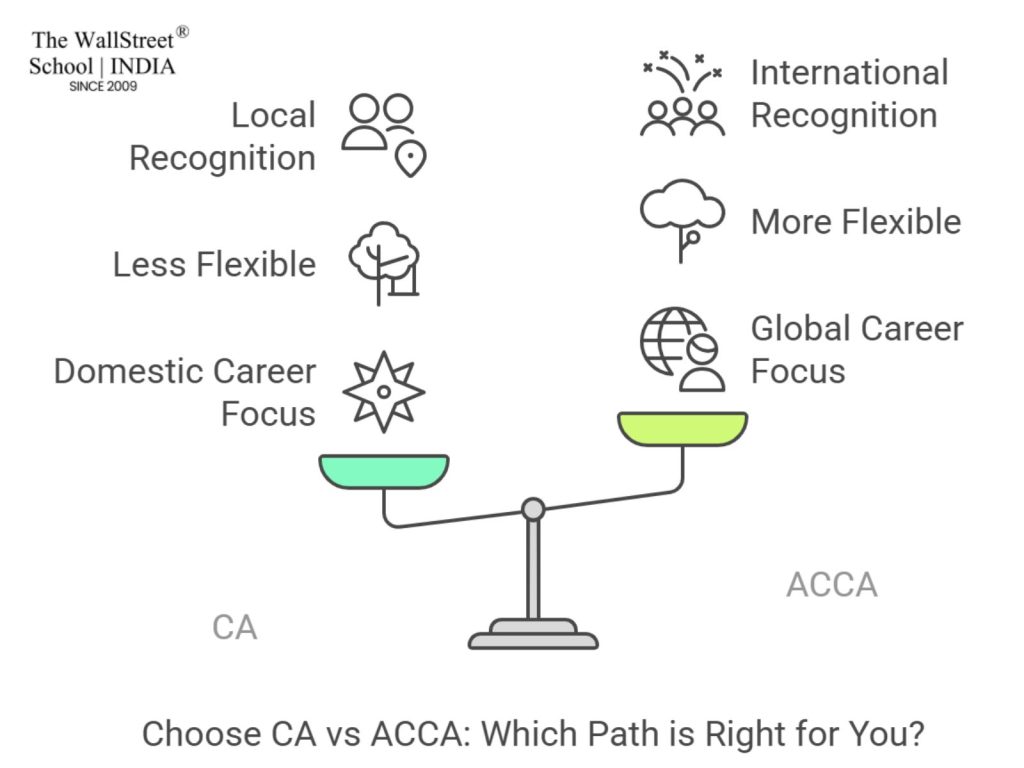
Choosing a career in accounting or finance isn’t just about picking a job. It’s about deciding what kind of work you want to do, where you want to work, and how much flexibility you want in the future. That’s why many students and young professionals often ask themselves: Which is better, CA or ACCA?
It’s a fair question. Both qualifications open doors. Both are respected. But they’re built differently, and the best choice depends on where a person stands today and where they want to be tomorrow.
Now let’s break it down; exam structure, career options, costs, recognition, and more in this blog. Keep reading to figure out which path suits you better.
Understanding CA and ACCA
The Chartered Accountant (CA) course is offered by the Institute of Chartered Accountants of India (ICAI). It’s one of the toughest professional exams in India and is very focused on Indian tax laws, auditing, and accounting practices.
On the other side is the Association of Chartered Certified Accountants (ACCA). It’s a UK-based body that’s recognised in over 180 countries. The ACCA qualification is more globally oriented, with an emphasis on international accounting standards and global business knowledge.
So, when people ask which is better, CA or ACCA, the answer really comes down to goals, geography, and even personality.
Course Structure and Time Investment
For someone who wants to build a career strictly in India and doesn’t mind a long and intense preparation period, CA makes sense. But for those looking at international opportunities or a shorter course length, ACCA might be a better fit.
Here’s a tabular comparison to give you a clear view of what features each pursuit has to offer:
| Feature | CA (India) | ACCA (Global) |
| Body | ICAI | ACCA (UK) |
| No. of Exams | 20+ across 3 levels | 13 (some exemptions possible) |
| Duration (avg) | 5 years or more (depending on attempts) | 2–3 years (with consistent effort) |
| Recognition | Strong in India | Global recognition |
| Articleship / Internship | 3 years mandatory | 3 years work experience (flexible) |
| Exam Pattern | Mostly descriptive | Mix of objective and descriptive |
Cost of Pursuing
The cost of each course is also quite different. The CA programme is more affordable. The entire journey costs around INR 2–3 lakhs, depending on coaching and the number of attempts.
ACCA, being an international qualification, comes with higher expenses. It can cost between INR 2.5–4 lakhs, including registration, exam fees, and classes. If a candidate is eligible for exemptions due to prior education like B.Com or CA Inter, the cost can drop slightly.
That said, some students argue that the predictability and faster pace of ACCA make the investment worth it. Again, it brings us back to that core question, which is better CA or ACCA, when thinking about return on effort and money.
Difficulty Level
There’s no sugar-coating this; CA is harder. The syllabus is vast, and the pass percentage is low. The exams are known for their unpredictability. Even bright students sometimes take years to clear all levels.
ACCA exams, though tough in their own right, offer more flexibility. Students can attempt one paper at a time, and exams happen quarterly. This helps in focused preparation.
So if someone prefers structured progress and a bit more control, ACCA may feel more manageable.
Career Opportunities
Once qualified, what happens next? This is what most students care about.
- CA professionals often work in Indian firms, banks, consultancy services, or start their own practice. Their strong hold on Indian tax and corporate law makes them in demand locally.
- ACCA professionals find work in multinational companies, global consulting firms, and roles that deal with international finance and IFRS standards. They often take up roles in internal audit, financial reporting, and global compliance.
So again, when someone wonders which is better, CA or ACCA, it depends on where they want to work; in India, or globally.
Flexibility and Exemptions
ACCA is known for giving exemptions if the student has done relevant degrees like B.Com, M.Com, or has cleared parts of CA. This saves time and money.
CA doesn’t offer any real exemptions. Every student, no matter their background, has to go through all levels.
For working professionals, ACCA is easier to balance with a job, because of its paper-based exam structure and online resources.
Recognition and Global Scope
If the goal is to work in the UK, the Middle East, Singapore, or even parts of Europe or Africa, ACCA clearly wins.
CA is mainly recognised in India, and while some firms abroad may acknowledge it, it doesn’t have a formal global status like ACCA does.
Still, CAs often have deep expertise in Indian finance laws, so for those staying back, it’s a highly respected title.
Bottom Line: Which is Better, CA or ACCA?
There’s no fixed answer. Each has its own weight. One isn’t better than the other in all ways. It’s about picking what suits a person’s life goals and strengths. But here’s a practical breakdown:
- Choose CA if your plan is to live and work in India, enjoy law and tax topics, and are ready to commit long hours to preparation.
- Choose ACCA if you want global mobility, prefer a modular structure, and want to complete your qualification faster.
Conclusion
When deciding which is better, CA or ACCA, it is about where someone wants to build their life and what kind of work makes them tick rather than just pay packages. For some, a stable CA practice in India is the dream. For others, a global finance role with ACCA might be the path.
If you’re still unsure or just want the right guidance to move forward, consider browsing through the certified courses that The WallStreet School has to offer. They are renowned for their practical training and career-focused approach and have helped thousands of students make confident decisions and succeed; whether they choose CA, ACCA, or something else altogether. Think long term. Match the course with your lifestyle, interests, and goals. Then take the leap.
FAQs
- Is ACCA easier than CA?
In terms of pass rate and structure, yes. ACCA allows one-paper attempts and has a more predictable exam pattern. But it still requires dedication and planning. - Can I pursue both CA and ACCA together?
Technically, yes. But it’s tough and not advised unless someone has cleared most of CA. Better to focus on one fully and then consider the other. - Which course has better global opportunities?
ACCA is designed for global roles. It’s accepted across 180+ countries. CA, however, shines in India and is ideal for those staying in the country.
- Does ACCA have value in India?
Yes, especially in MNCs and Big Four firms. But for local practice, CA is more valued due to its legal recognition in India.
